Growth strategy, creative and AI systems for founders who want results, not more marketing activity.
I'm Siddharth. I find the constraint holding growth back, then build whatever actually fixes it, whether that's positioning, paid acquisition, creative or the AI systems underneath.
Click rate, offer rebuilt
Solo built, no agency layer
Stages owned, start to finish

Three places your growth problem is actually hiding.
Creative & Brand
The story that makes someone stop for a second, told sharply enough that the rest of the funnel has something worth converting.
Your ad stops looking like everyone else's ad. People finish the hook instead of scrolling past it.
Paid Acquisition
Attention bought on purpose and aimed at people already close to yes, then read correctly enough to know what's actually working.
Cost per click stops being the only number you watch. The same shift took one campaign from a 1% to a 3.5% click rate.
AI & Automation
The invisible machinery that removes a real bottleneck, so a business can do more without hiring its way there.
The busywork quietly disappears from someone's week.
The actual deliverables, and what they change.
Performance Marketing, End to End
Full ownership of the Meta and Google accounts, from account structure and audience logic to creative, budget pacing and the weekly read of what the numbers are saying.
Spend stops being a guess. Every rupee has a stated job and a number it answers to.
founders already spending, without anyone owning the whole account.
Conversion Websites
A site built around one job. Structure, copy and design arranged so a visitor arrives, understands the offer and becomes a lead or a sale without friction in between.
Traffic you already pay for stops leaking on the page it lands on.
anyone sending paid traffic to a page that was never designed to convert.
Meta Ads, Start to Finish
Strategy, creative, copy and campaign management under one roof, so the insight that drives the hook is the same insight that drives the targeting and the landing page.
No handoff gaps. The ad, the promise and the page finally say the same thing.
teams stitching together a strategist, a designer and a buyer who never speak.
UGC & Scroll Stopping Statics
Ad creative built as persuasion rather than decoration. Scripted UGC and statics that carry a specific belief change, not a product feature list.
You get creative you can test against a hypothesis, not just more assets.
brands whose ads are well produced and still ignored.
AI Automation Systems
Custom automation built around one named bottleneck, whether that is lead follow up, reporting, content production or the manual steps nobody has time to do properly.
Capacity goes up without headcount going up.
small teams where the constraint is hours, not ideas.
Growth isn't three jobs. It's one system multiplying itself.
Most businesses hire a marketer for attention, a designer for the website and a salesperson for conversion, then wonder why growth still feels stuck. The Growth Stack is the field guide I give clients before we work together: how offer, attention and conversion actually compound into one number, why fixing only one of them rarely moves it, and the exact diagnostic I use to find out which engine is quietly broken.
Free · Worth $1,000 · No email needed
Offer. What you sell, and who it's actually built for.
Attention. How people find out you exist in the first place.
Conversion. How that attention turns into revenue.
If any one of the three is close to zero, the result is close to zero, no matter how strong the other two are.
Could a stranger repeat what you do, in one sentence, after reading your site once?
Does every channel you use send people to one page you actually own?
Does your page offer exactly one next step, not several competing ones?
Built with real products, real spend, real constraints and real market feedback.
Not client theatre. Not hypothetical campaigns. Work I had to make succeed when the product, creative, page, traffic and outcome were all mine.
Building the site first, so the ads would have somewhere good to land.
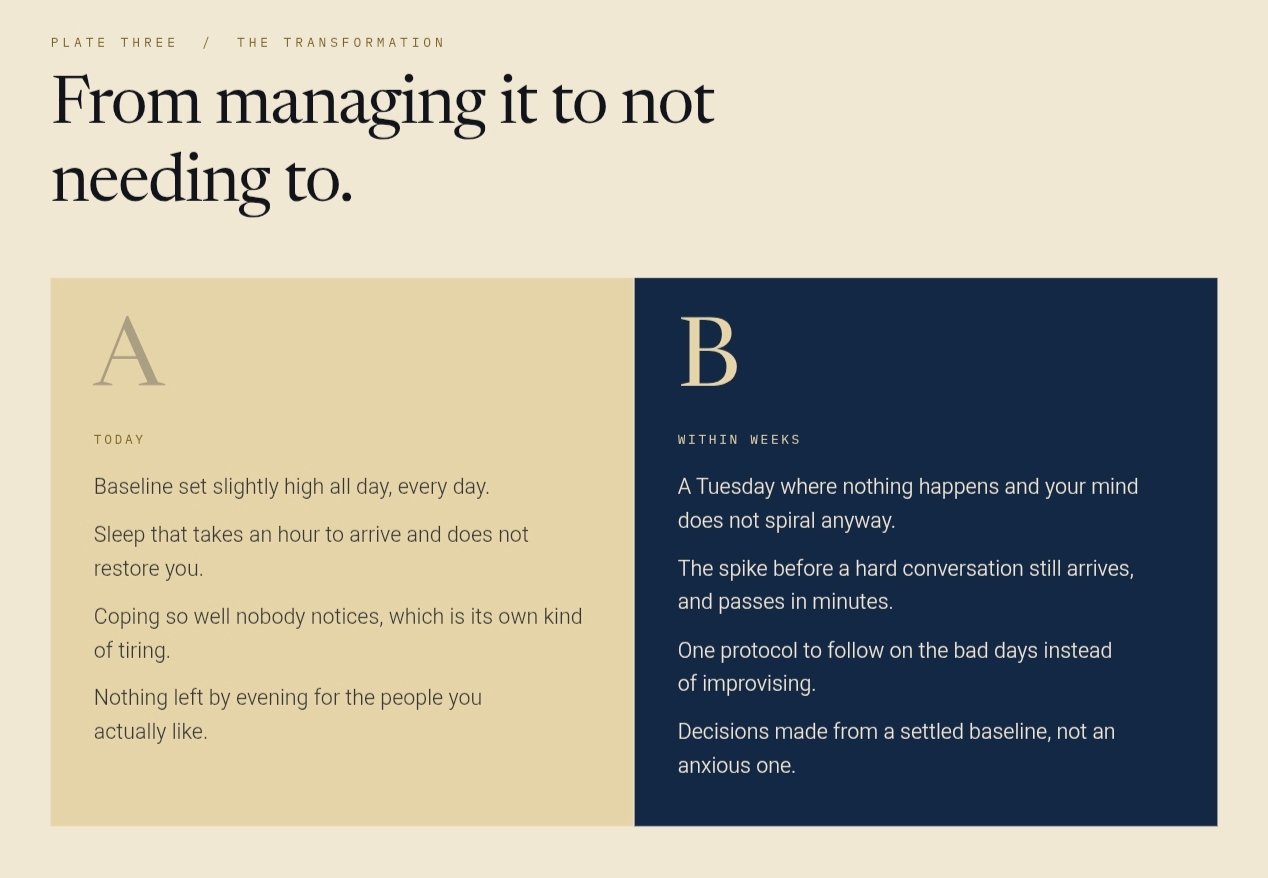
Quiet Mind's website is the strongest conversion design work done so far. The ad creative is still being finished, built on the same behavioural insight shown below.
Peak Meta CTR
Repeat range
Where it started
Website: finished and live. Ad creative: in active production, using the same research below.
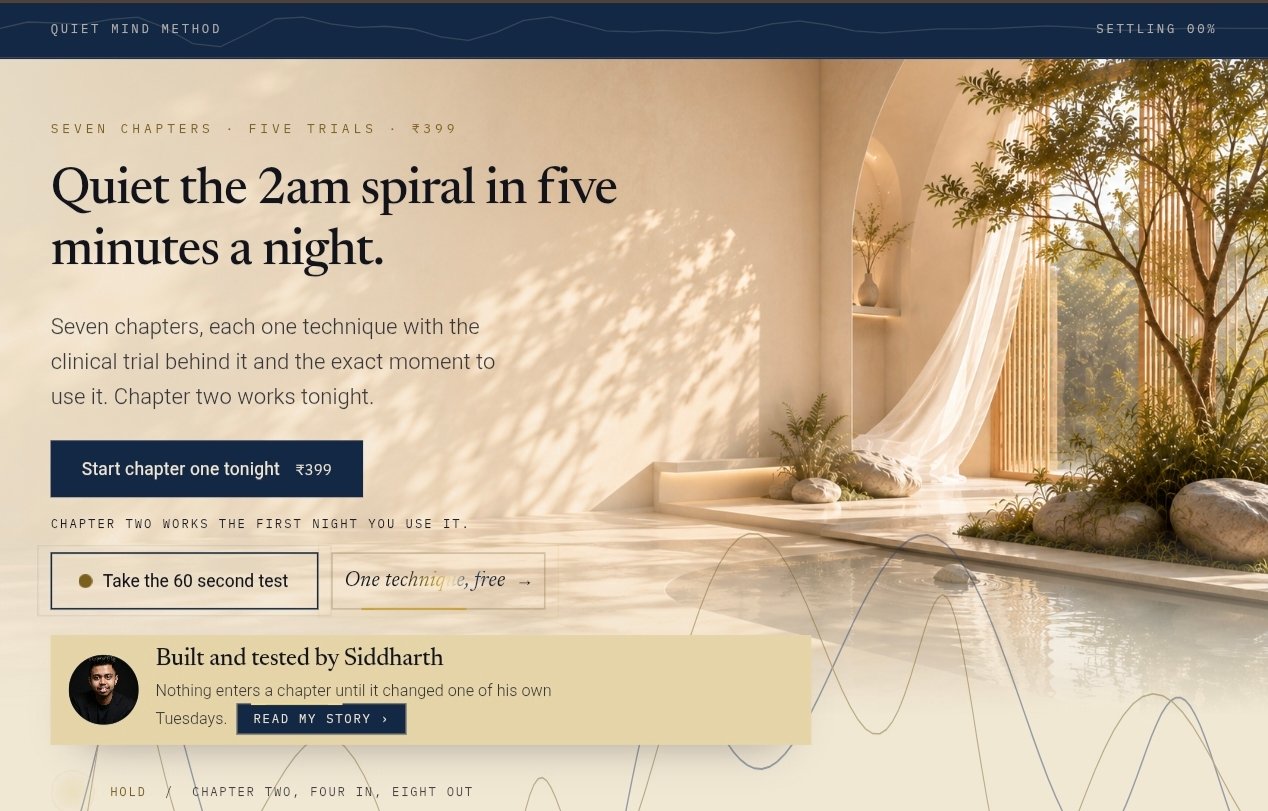
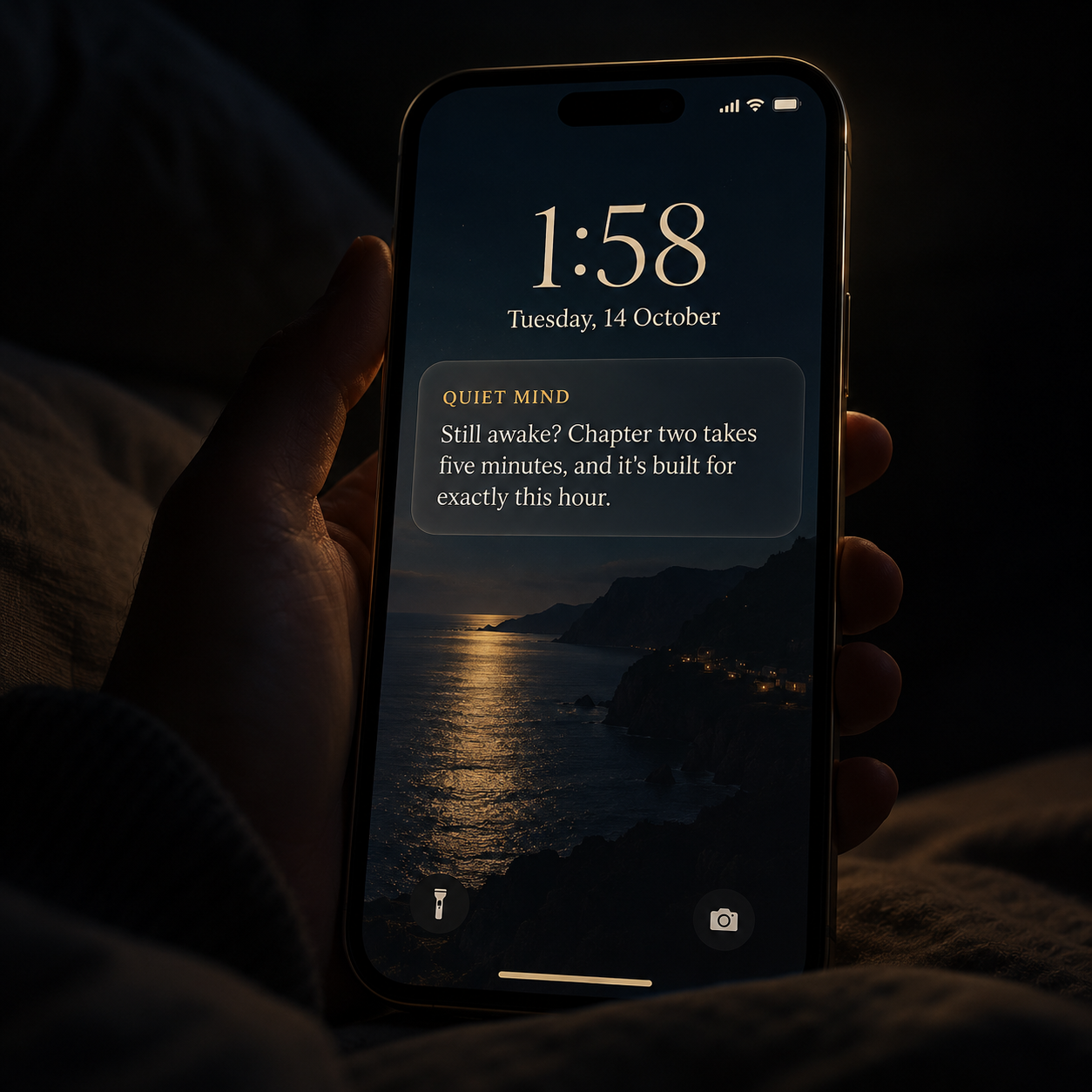

Obvious anxiety ads are weak ads. Anyone who names the condition out loud is talking to people who already identify with it, which is a small and defensive audience. The people worth reaching do not call it anxiety. They call it a bad night, a busy head, a Tuesday.
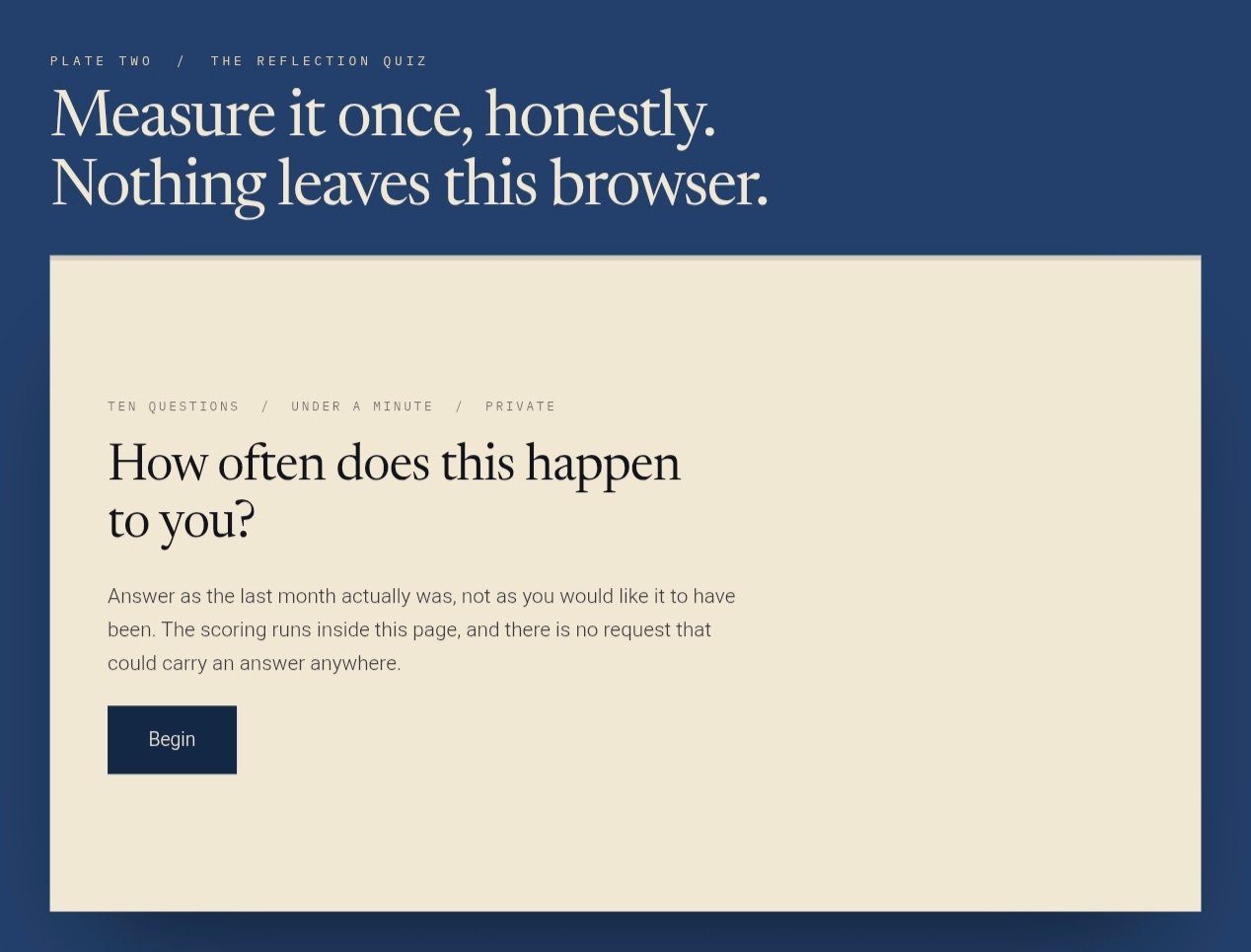
Priced at ₹399, roughly $5, for lifetime access. Seven chapters, one technique each, with the five clinical trials behind them cited in place. The page carries a private sixty second reflection quiz, then a single checkout.
Creative is targeting before the audience settings ever get involved.
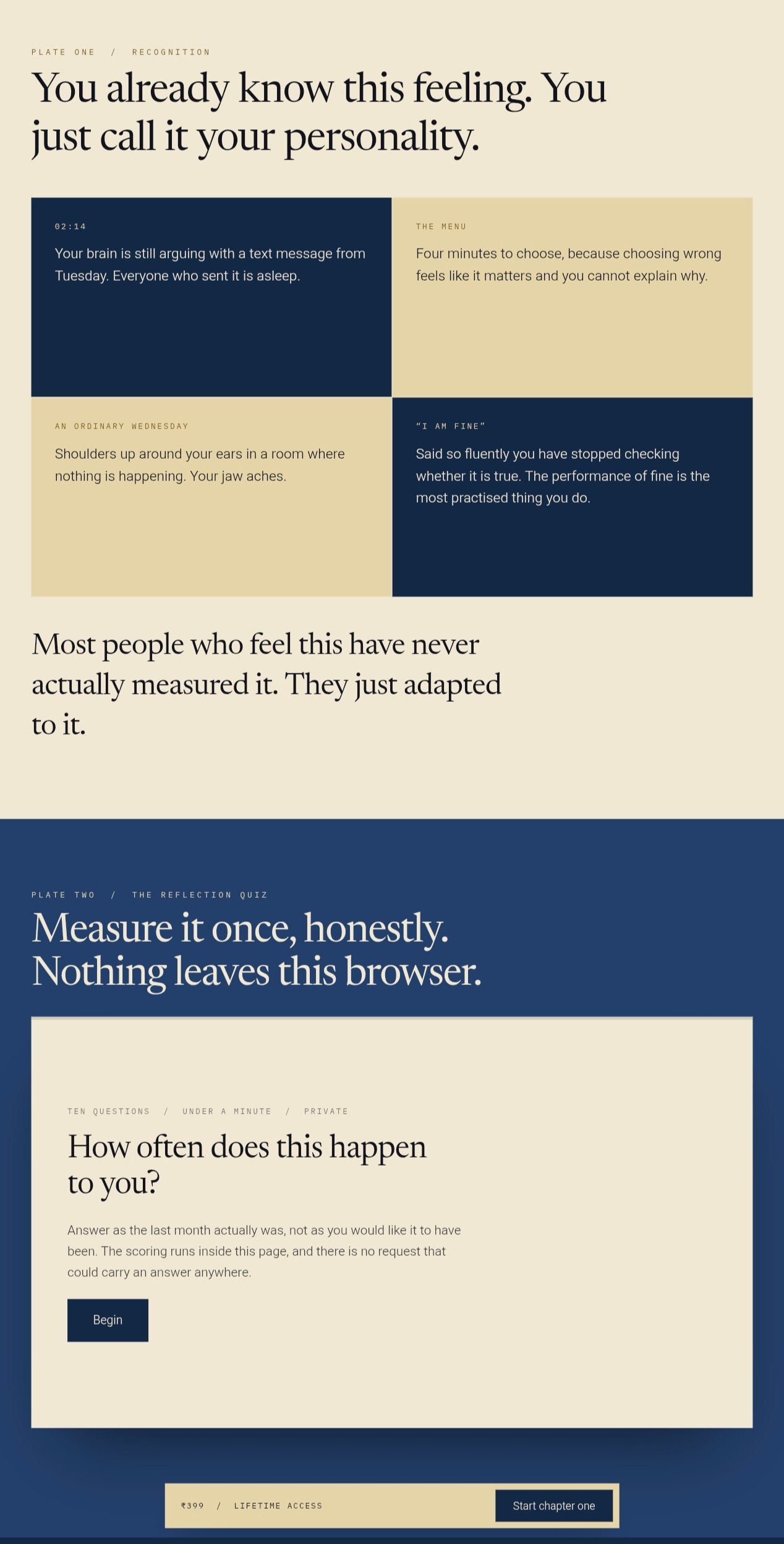
A click rate moved from roughly 1% to a 3.5% peak without new budget, new audiences or new placements. The variable was the insight in the creative and the page it landed on.
Selling a relationship problem people struggle to put into words.
Presales during early validation
Founding member price, ₹499
Early Meta creatives recorded click through rates around 3.11% and 2.68%, with clicks costing roughly ₹7 to ₹12, about 8 to 14 cents, during early testing. Owned product launch data, not client results.
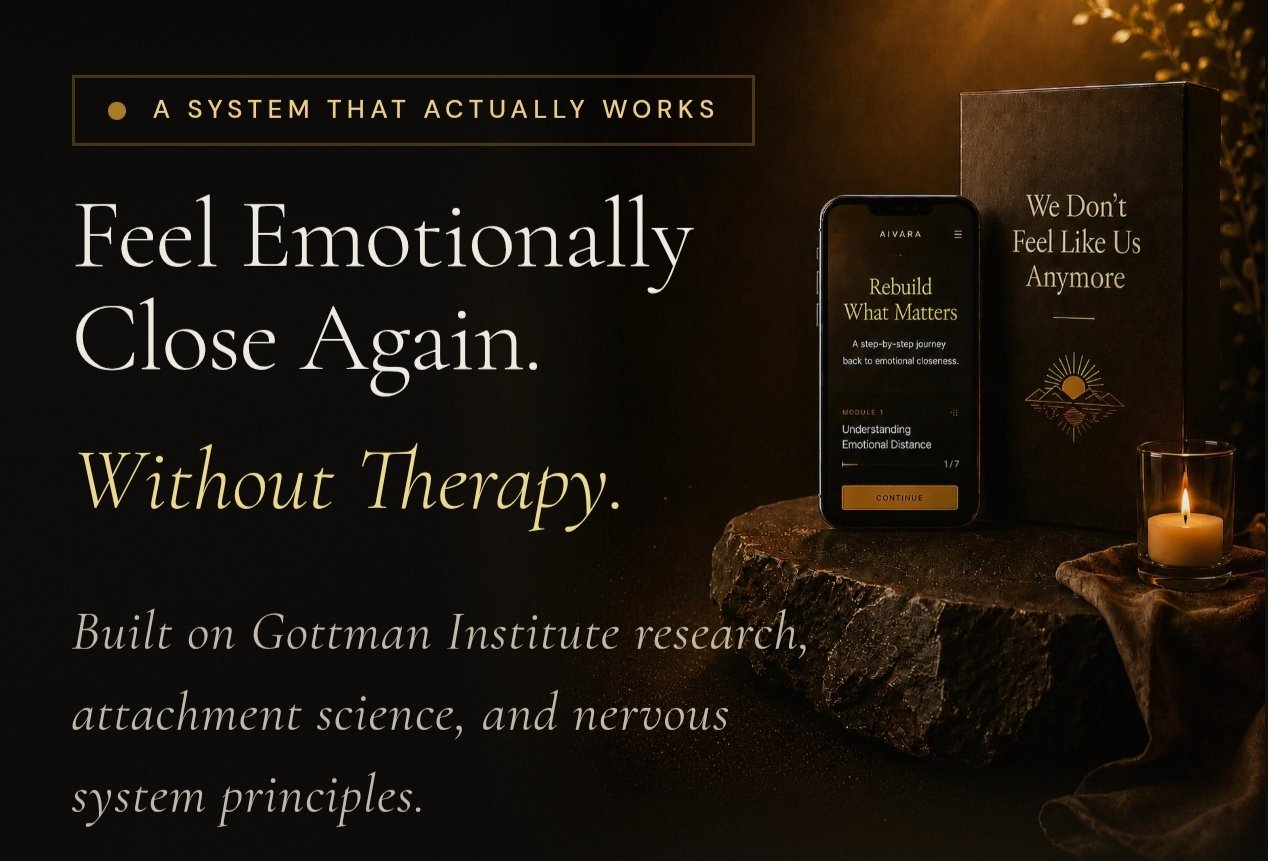
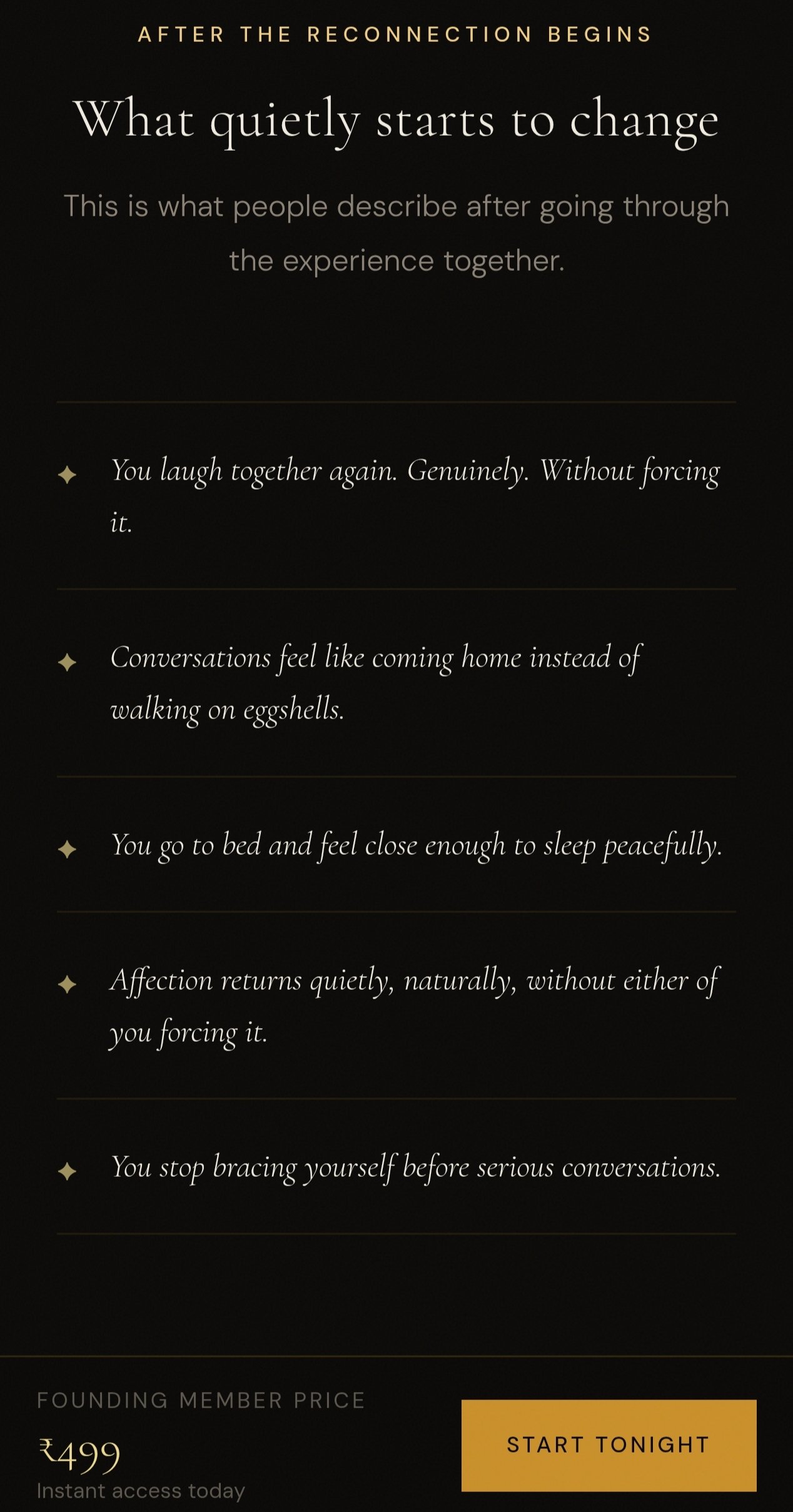
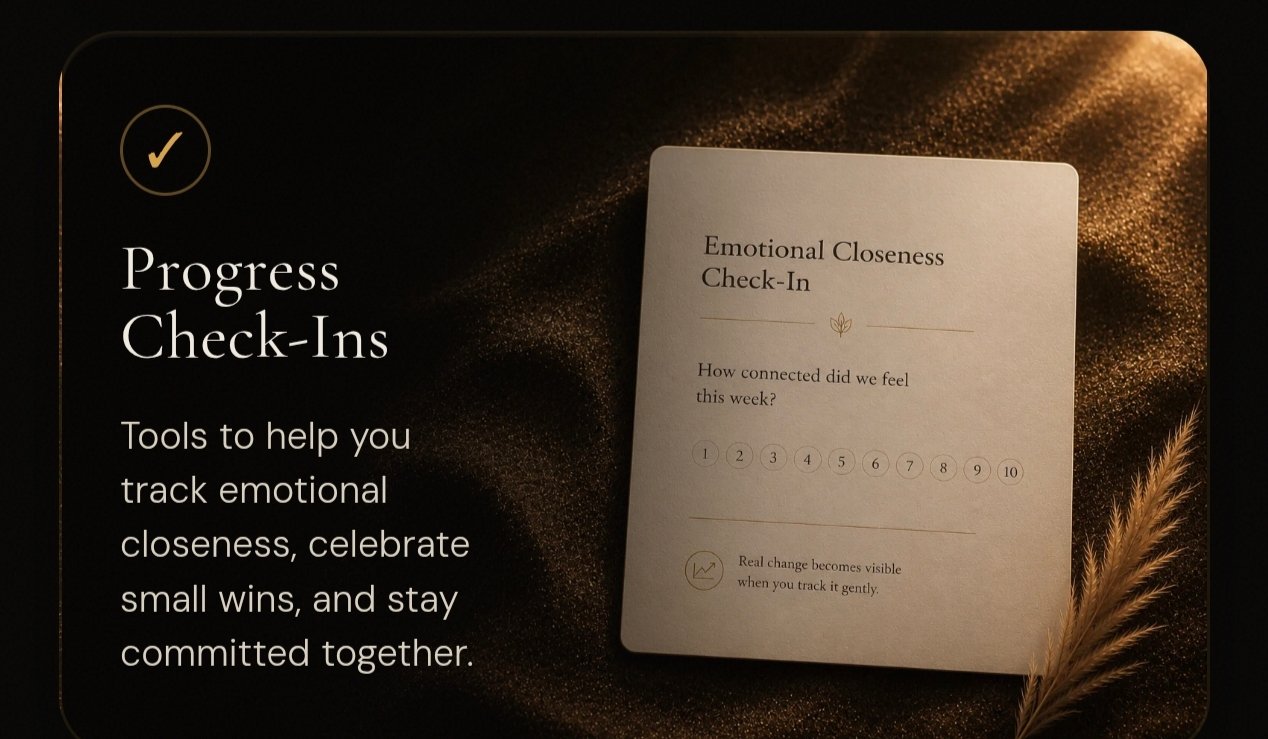
A guided reconnection experience for couples who still love each other and no longer feel emotionally safe with each other. Built on Gottman Institute research, attachment science and nervous system principles, delivered as modules rather than sessions.

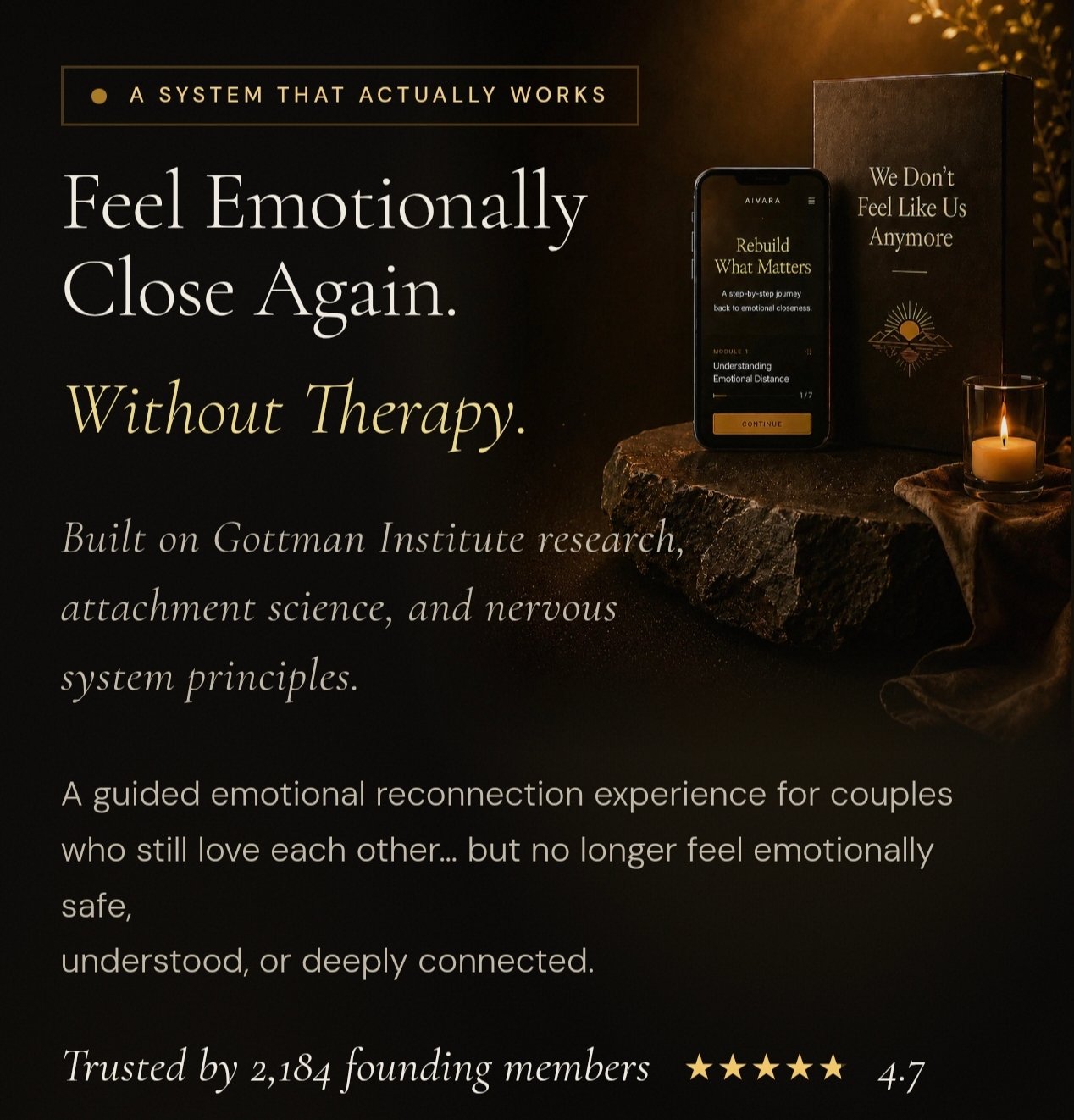
Attention and conversion are not the same thing.
We don't feel like us anymore.
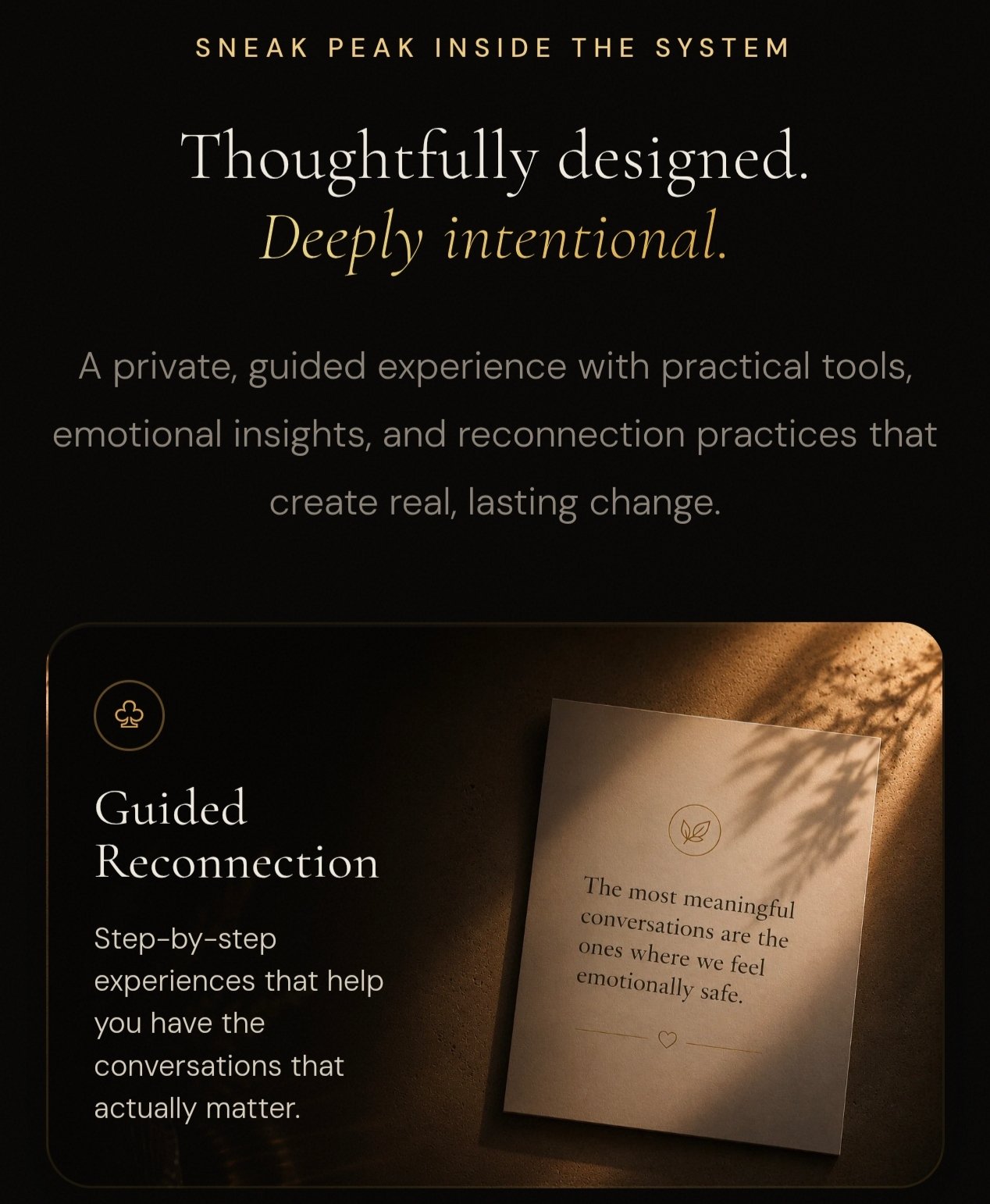
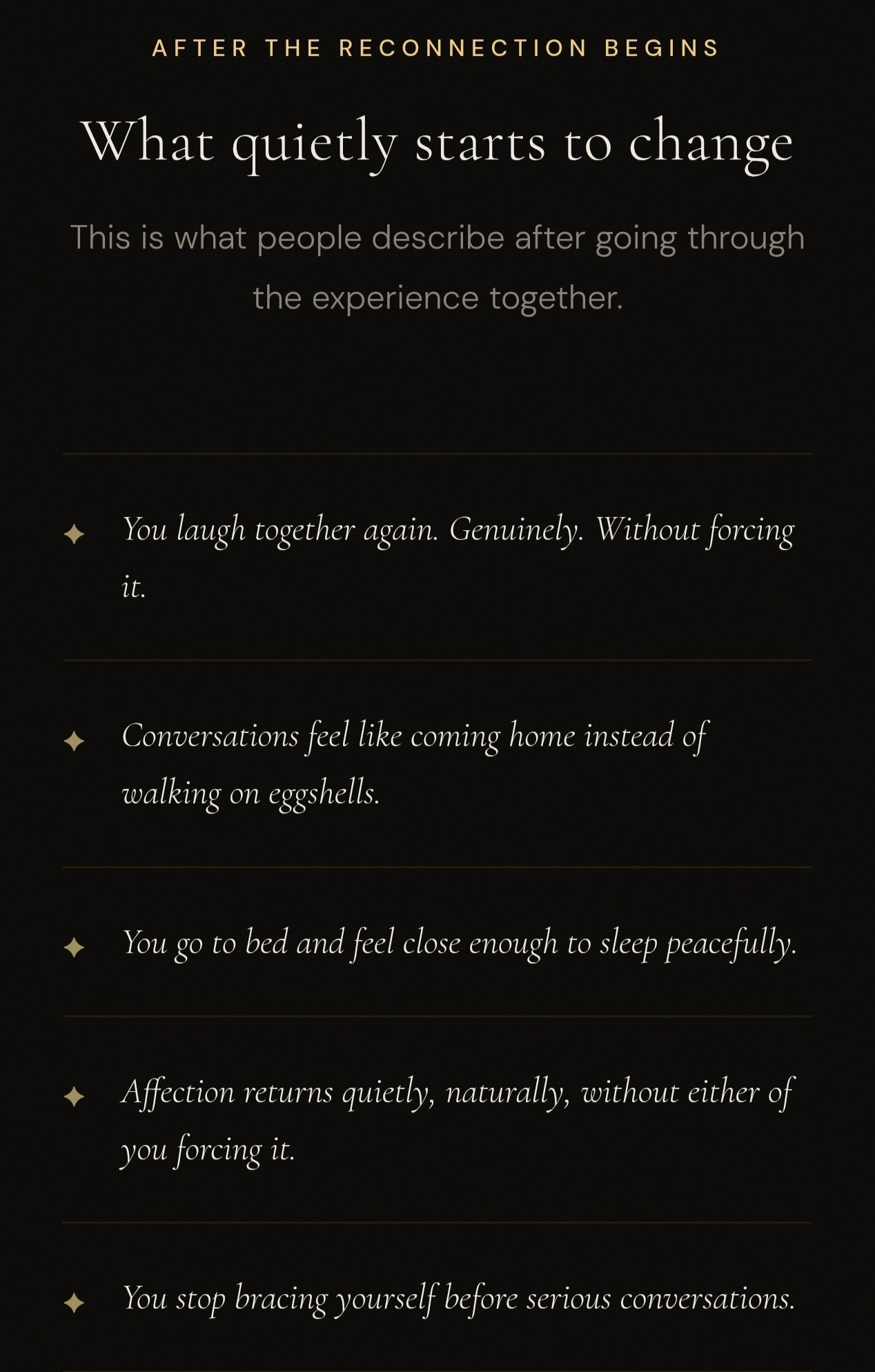
A problem people cannot name can still be sold, provided the creative says it for them first. Presales arrived before the product was finished, which is the only validation worth having.
Turning "we need more customers" into a 365 day marketing system.
AIVARA Restaurant Growth Engine. A full year system, built as an owned product, not a single campaign.
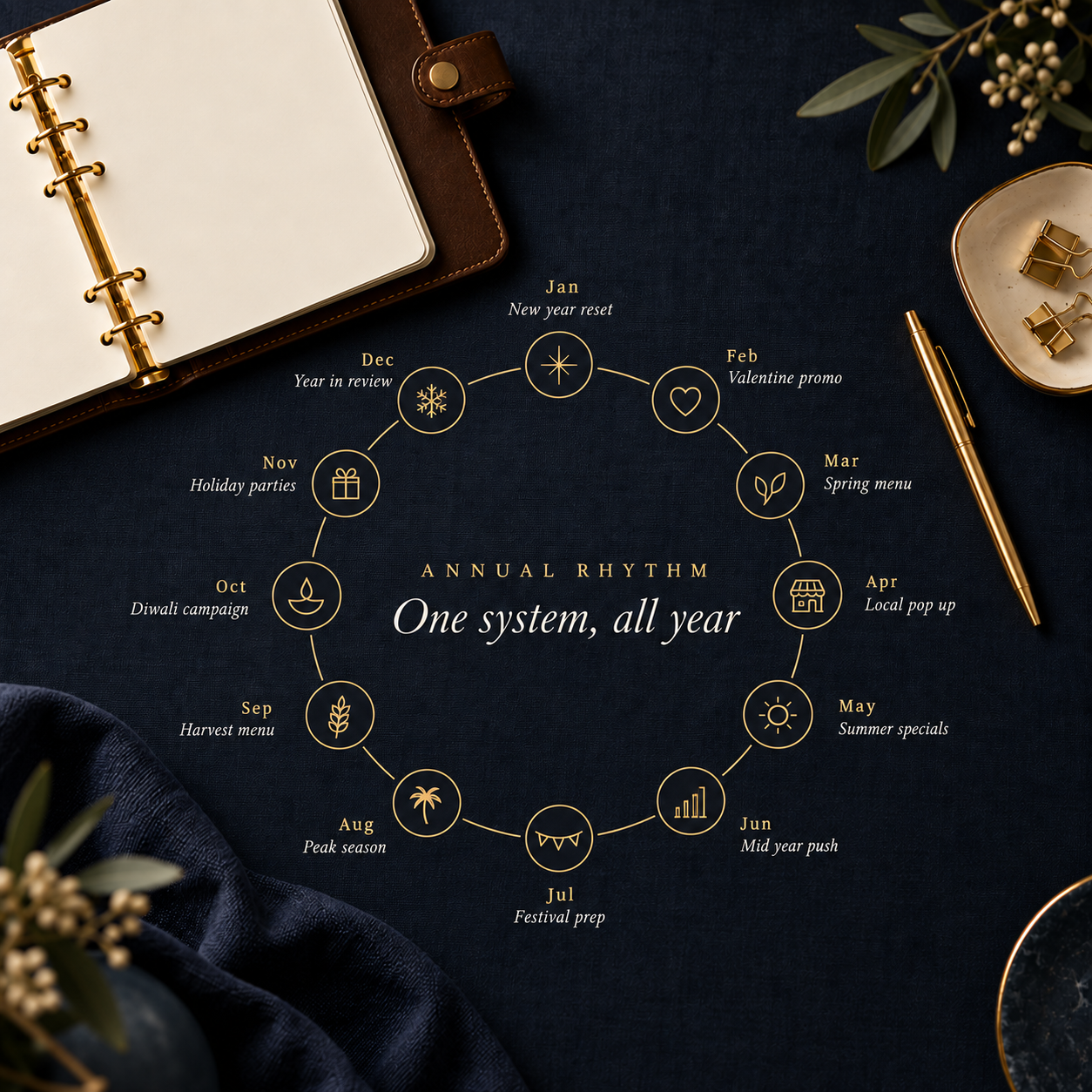
Restaurants rarely lack ideas. They lack consistency. Marketing happens when someone remembers, which means it happens after a slow week rather than before one.
Taste wins today. Marketing wins tomorrow. Win tomorrow, every day.
Annual Rhythm
Twelve months mapped to festivals, seasons and local demand, so nothing is invented in a panic.
Offers & Retention
Offers designed to bring a table back rather than discount the first visit.
Content Planning
A weekly shooting and posting rhythm a kitchen team can actually keep.
Memory Building
Repetition of one idea until the restaurant occupies a specific place in the neighbourhood's head.
Positioning came first. Before any calendar was written, the restaurant had to be one specific thing to one specific person, otherwise the year would be twelve months of noise.
Growth strategy is often a scheduling problem wearing a creative costume. A system that decides in advance beats a team deciding in the moment.
Making AI production stop feeling like AI production.
Still growing. The clearest evidence of this is live and updating, not a locked case study.
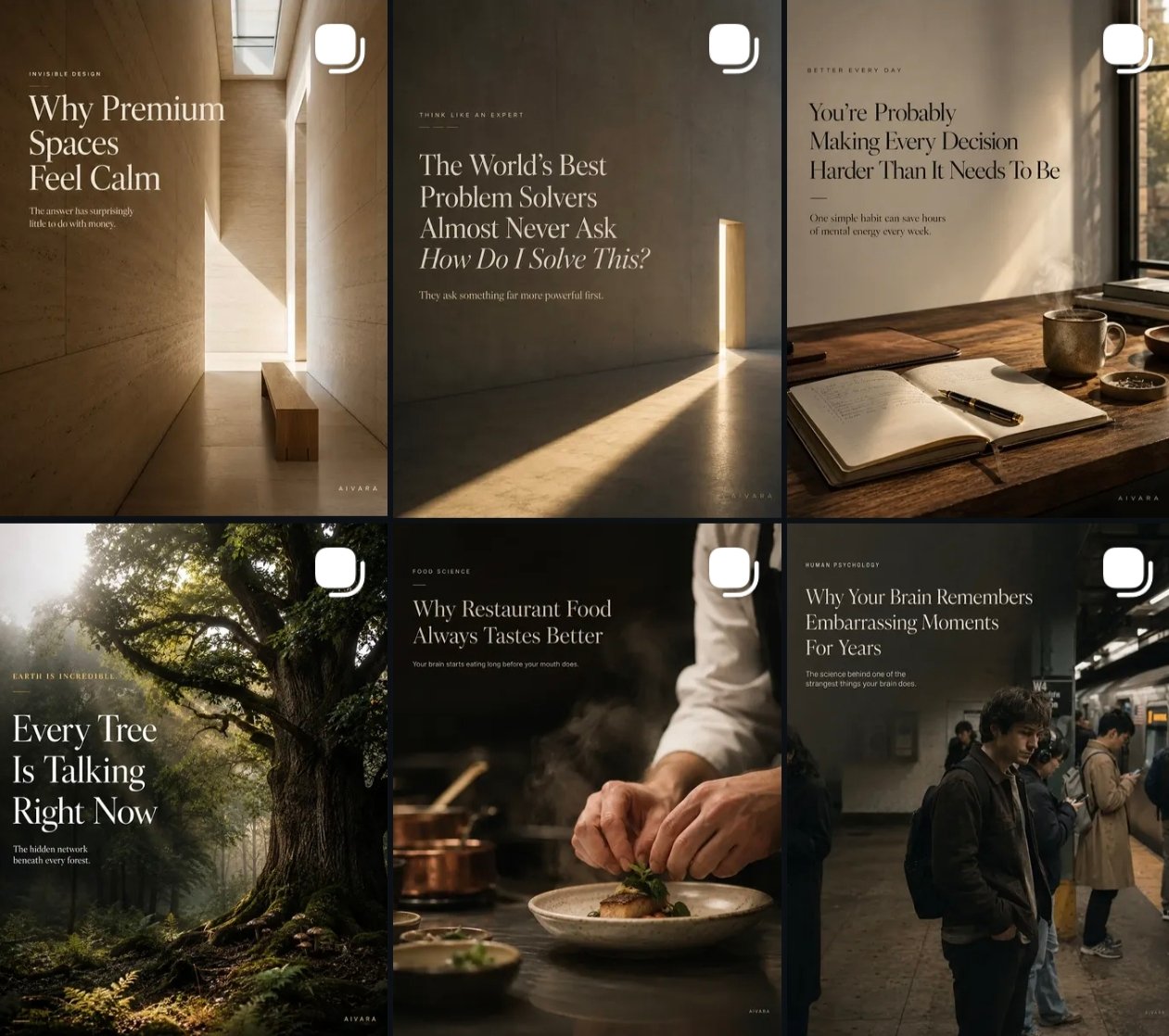
Four things give synthetic work away: expression that resets between frames, camera language that no operator would choose, motion that floats, and pacing that never breathes. Fixing them is direction work, not prompt work.
The Quiet Mind creative works without a face in it. A phone, a room and an hour carry the whole message, which sidesteps the uncanny problem entirely and keeps the viewer inside their own life.
Synthetic production. Human standards.
Virtual talent and recurring characters are still being built. They are not shown here as finished work, because they are not finished work.
The tool is not the differentiator. Taste, direction and restraint are what make AI output publishable next to real production.
What changes when your own money is attached to every marketing decision.
My toughest marketing client was me. My product. My money. My numbers. Nowhere to hide.
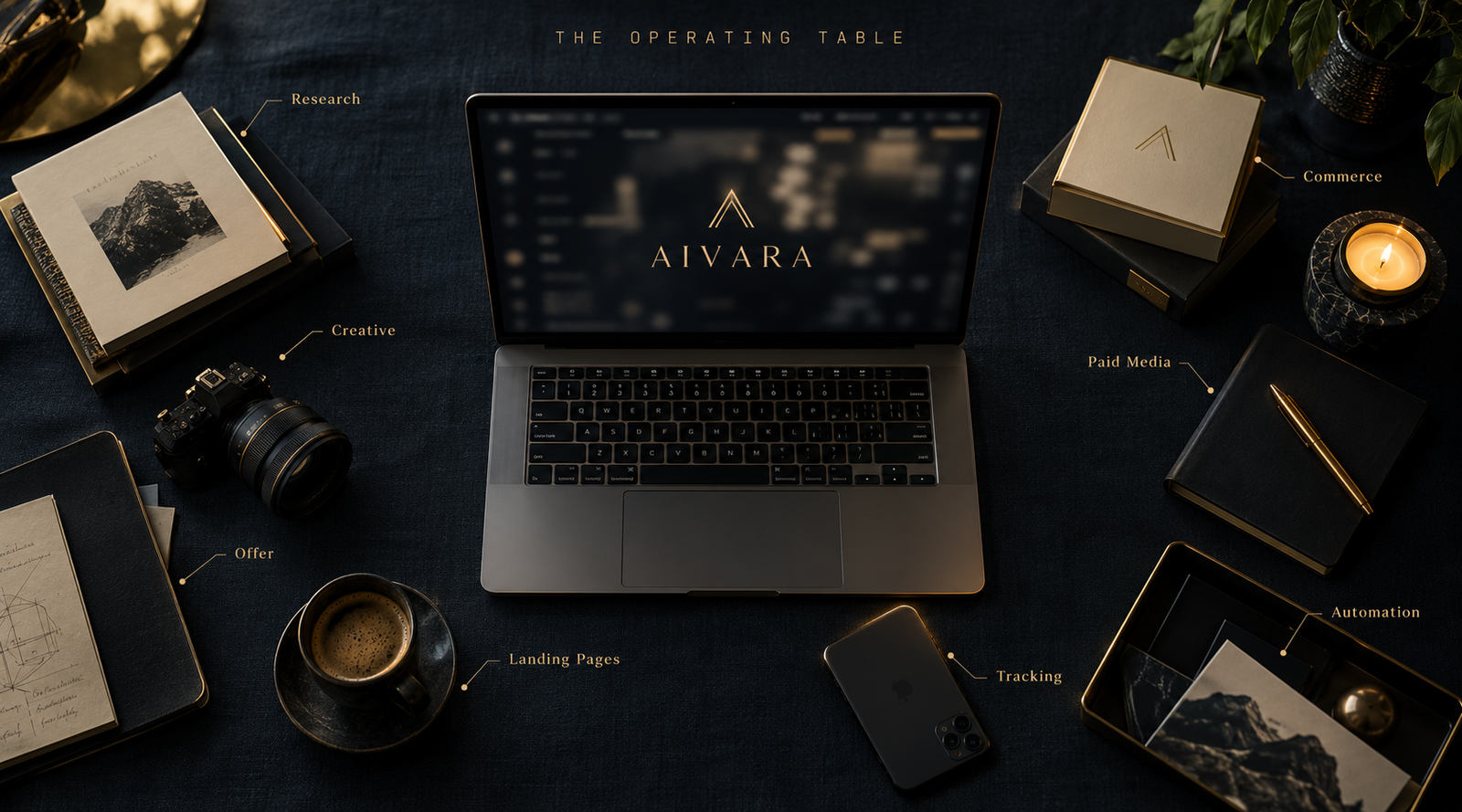
AIVARA started as a way to stop theorising. Every belief I had about positioning, creative and paid traffic went into products I owned, priced and sold, which means every wrong belief cost me money instead of costing a client money. That is the whole education.
not eleven jobs
They are drawn as a ring because each one is only as good as the information the others hand it.
Owning every stage removes the excuse. When research, creative, page and spend belong to the same person, a bad result has exactly one place to point.
"I am not interested in adding more marketing activity. I am interested in finding the constraint."
"Bring me the constraint. I'll build the leverage."
Meta click rate
Built AIVARA, no agency layer
Best Software Engineering Project, IIT Madras
B.S. Data Science and Applications, minors in Generative AI and Multimodal AI
Siddharth and AIVARA are not two different things.
AIVARA is my own brand and my operating ground. It is not a client and it is not a portfolio prop. It is where offers get priced, pages get built, ads get bought and mistakes get paid for out of my own account.
Which means hiring one is hiring both. You get the person who does the work and the standard the brand was built to.
Same business. Three completely different websites.
Every page in the work above, this one included, started as one of three possible websites. There's the one that doesn't exist, quietly skipped before anyone compares it to anything. There's the average one, which looks fine and still loses the sale. And there's the one that answers before it asks, sounds like you and not the category, and makes every ad and referral afterward cheaper. The Perfect Website is the exact breakdown of all three, plus the homepage checklist I use on my own projects before a single line of code gets written.
Free · Worth $1,000 · No email needed
The Perfect
Website
research a business online first
the conversion rate at one second load
Five signs a website is quietly losing money.
Nobody can repeat your headline back to you.
Every enquiry starts with the same question your site never answered.
It takes longer than three seconds to load on mobile data.
It hasn't been edited since the day it launched.
You can't name the one action it's actually asking for.
Diagnose First
Nothing gets built until the constraint has a name. Usually it is the offer, the page or the creative, and usually it is not the thing that felt urgent.
Build What It Needs
Then the work is scoped to that constraint alone. A page, a campaign, a creative system or an automation, not a retainer full of activity.
Ship Measure Adjust
It goes live, it gets measured against the number it was supposed to move, and one variable changes at a time until it moves.
you know exactly what is being built before any work begins.
deadlines with room in them, so quality is never the thing that gets cut.
every deliverable is judged against the number it is supposed to move.
Want to see how I actually think, in writing.
The Filter Effect is nine pages on why cheap clicks are usually the most expensive thing a business can buy, and what that actually means for creative, paid media and the AI systems underneath them. It's the reasoning behind everything above, written out in full rather than condensed onto a page like this one.
Free · PDF · No email needed
The Filter Effect
What is currently slowing growth?
Tell me what you're trying to grow, what you've already tried, and where you think the system is breaking.